Ever received a message that simply says TTM and wondered what it means?
You’re not alone. Internet slang evolves fast and keeping up with new abbreviations can feel like learning a new language every year.
Whether you’re scrolling through Instagram chatting on Snapchat texting friends or hanging out on Discord you’ll likely come across shorthand expressions designed to make communication quicker and more casual.
One abbreviation gaining popularity across digital conversations is TTM meaning in text. While it looks simple its meaning can vary slightly depending on context platform and the relationship between the people chatting.
In this guide, you’ll learn exactly what TTM means, where it came from, how to use it naturally, examples from real conversations common mistakes to avoid, and related slang terms you should know.
Updated for 2026 this is your complete resource for understanding TTM in modern online communication.
What Does “TTM” Mean?
Quick Answer
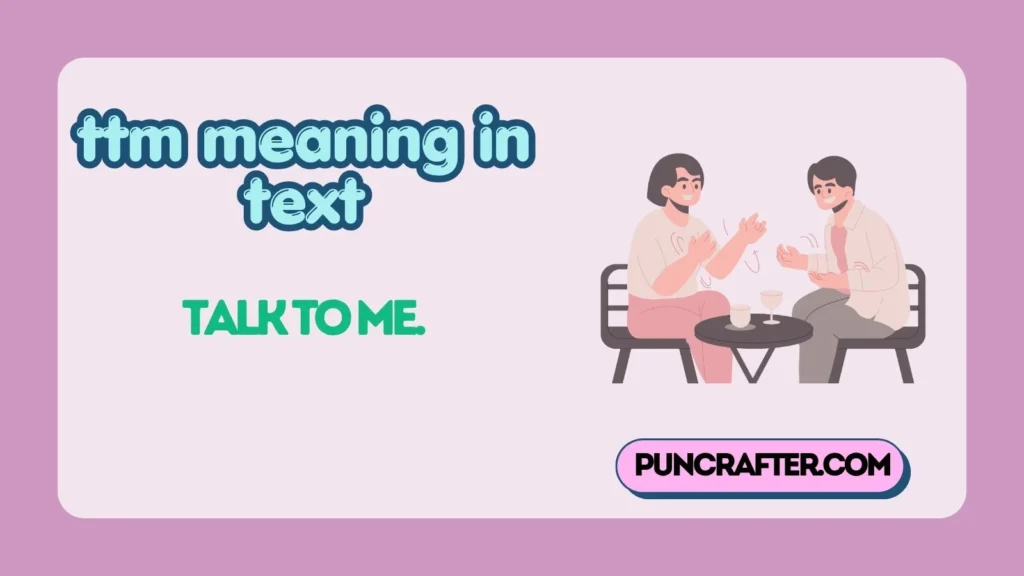
TTM means “Talk To Me.” It is a casual abbreviation used in texting and online messaging to invite someone into a conversation or encourage them to respond.
Definition
The most common meaning of TTM is Talk To Me.
People use it when they want attention, conversation, advice, companionship, or simply someone to chat with.
Examples:
- “I’m bored. TTM.”
- “Haven’t heard from you all day. TTM!”
- “Need opinions on something. TTM.”
Origin of TTM
TTM emerged from the broader culture of internet abbreviations that became popular in SMS messaging during the early 2000s. As character limits and mobile keyboards encouraged shorter communication, abbreviations such as LOL, BRB, IMO, and TTM became increasingly common.
The phrase gained additional traction through:
- Text messaging
- Snapchat stories
- Instagram captions
- Twitter/X posts
- Online forums
- Discord communities
How the Meaning Has Evolved
Originally, TTM simply meant “Talk To Me.”
Today, it can also imply:
- “Message me”
- “I’m available to chat”
- “Let’s discuss something”
- “Give me attention”
- “Tell me what’s going on”
The exact emotional tone depends on context.
Pronunciation
Most people don’t say TTM aloud as a word.
Instead, they pronounce each letter individually:
“T-T-M”
How to Use “TTM” Correctly in Texts & Chat
Understanding context is key when using TTM.
Casual Conversations
TTM works best in relaxed environments with friends, family members, classmates, and online communities.
Examples:
- “TTM when you get home.”
- “Need recommendations. TTM.”
- “Been a long day. TTM.”
Emotional Tone
TTM can express:
- Friendliness
- Curiosity
- Loneliness
- Excitement
- Boredom
- Flirtation
The surrounding message usually determines the mood.
Platform-Specific Usage
SMS/Text Messages
Used as a quick request for conversation.
Example:
“TTM later tonight.”
Often appears in group chats or private messages.
Example:
“Anyone free? TTM.”
Instagram DMs
Used to encourage replies.
Example:
“Got some news 👀 TTM.”
Twitter/X
Appears in posts inviting discussion.
Example:
“What’s everyone’s opinion on this? TTM.”
Discord
Frequently used in gaming communities.
Example:
“Need teammates. TTM.”
Less common but occasionally used in casual discussion threads.
When NOT to Use TTM
Avoid using TTM in:
- Job applications
- Professional emails
- Academic papers
- Business presentations
- Formal customer support requests
Instead of:
“TTM regarding the project.”
Use:
“Please contact me regarding the project.”
Formatting Tips
Popular formats include:
- TTM
- ttm
- TTM!
- TTM 😊
- TTM ASAP
Common emoji pairings:
- 😊
- 👀
- 😂
- ❤️
- 🤔
Real Conversation Examples Using “TTM”
Between Friends
Alex: I’m so bored right now.
Jordan: Same.
Alex: TTM.
Meaning: Alex wants to start a conversation and pass the time.
In a Group Chat
Emma: Guys, I need vacation ideas.
Ryan: Beach or mountains?
Emma: Not sure. TTM!
Meaning: Emma wants suggestions and discussion.
Dating Scenario
Taylor: Haven’t heard from you all day.
Chris: Busy at work.
Taylor: TTM when you’re free ❤️
Meaning: Friendly affection and a desire to reconnect.
Family Chat
Mom: How was your exam?
Sam: It went okay.
Mom: TTM after school.
Meaning: The conversation will continue later.
Gaming Community
Player1: Looking for teammates tonight.
Player2: What game?
Player1: Valorant. TTM.
Meaning: Invitation to coordinate and chat.
Common Mistakes & Misunderstandings
Mistake #1: Assuming It Has Only One Meaning
While “Talk To Me” is by far the most common interpretation, some niche communities may use TTM differently.
Always consider context.
Mistake #2: Using It in Formal Communication
Many people mistakenly bring texting abbreviations into professional settings.
Avoid using TTM in:
- Corporate emails
- Client communication
- School assignments
Professional audiences may not recognize the abbreviation.
Mistake #3: Reading Too Much Into It
A message saying “TTM” doesn’t automatically signal something serious.
Sometimes the sender is simply:
- Bored
- Curious
- Looking for advice
- Wanting casual conversation
Generational Differences
Gen Z
Uses TTM naturally in everyday messaging.
Millennials
Generally understand it but may use it less frequently.
Older Generations
May not recognize the abbreviation without explanation.
How to Clarify
If you’re unsure, simply ask:
“What do you mean by TTM?”
Most people will happily explain.
TTM Across Different Platforms & Demographics
Gen Z Usage
Gen Z users frequently employ TTM to:
- Start conversations
- Boost engagement
- Invite responses
- Express boredom
It’s often paired with memes, emojis, or story posts.
Millennials
Millennials typically understand TTM but often alternate with phrases such as:
- Message me
- Hit me up
- Let’s chat
Older Adults
Recognition is growing, but many older users still prefer full phrases over abbreviations.
TikTok
TTM may appear in:
- Comment sections
- Creator captions
- Community engagement posts
Example:
“Need advice? TTM below.”
Common in:
- Stories
- DMs
- Captions
Discord
Highly common among gaming and hobby communities.
Is TTM Safe for Work?
Generally:
| Context | Appropriate? |
|---|---|
| Text Messages | Yes |
| Yes | |
| Yes | |
| Snapchat | Yes |
| Discord | Yes |
| Business Email | No |
| Academic Writing | No |
TTM is considered informal.
Related Slang, Abbreviations & Alternatives
If you’re learning internet slang, these terms often appear alongside TTM.
| Term | Meaning |
|---|---|
| DM | Direct Message |
| PM | Private Message |
| HMU | Hit Me Up |
| WYD | What Are You Doing? |
| IDC | I Don’t Care |
| IMO | In My Opinion |
| TBH | To Be Honest |
| BRB | Be Right Back |
| LOL | Laugh Out Loud |
| IRL | In Real Life |
Synonyms for TTM
- Message me
- Chat with me
- Hit me up
- Reach out
- Let’s talk
Opposite Ideas
Informal opposites include:
- Busy right now
- Do not disturb
- AFK (Away From Keyboard)
- Can’t talk
Suggested internal article anchors:
- Learn more about HMU meaning
- Learn more about TBH meaning
- Learn more about WYD meaning
- Learn more about DM meaning
- Learn more about AFK meaning
Why Do People Use TTM Instead of Writing Full Sentences?
One of the biggest reasons people use TTM is convenience. Modern digital conversations happen quickly, and abbreviations help users communicate faster without losing meaning.
Instead of typing “Talk to me when you’re free” or “Send me a message,” someone can simply write TTM. The abbreviation is short, easy to remember, and instantly understood by many frequent texters.
As messaging apps continue to dominate communication, shorthand expressions like TTM help keep conversations quick and engaging.
What Does TTM Reveal About the Sender?
TTM often provides clues about what the sender wants from the conversation.
Depending on the situation, it may indicate that the person is:
- Looking for companionship
- Seeking advice
- Feeling bored
- Wanting attention
- Sharing exciting news
- Hoping to reconnect
Unlike some abbreviations that focus on emotions, TTM is action-oriented. It encourages interaction and invites another person into a conversation.
When Is the Best Time to Use TTM?
TTM works best when you genuinely want someone to respond.
Common situations include:
- After a long day
- When seeking opinions
- During a boring moment
- Before making a decision
- When catching up with friends
- When discussing important news
Because TTM acts as a conversation starter, it is most effective when paired with a topic worth discussing.
How TTM Helps Start Conversations Online
Starting a conversation can sometimes feel awkward, especially online. TTM provides a simple solution by directly inviting communication.
For example, instead of waiting for someone to initiate a chat, users can post:
- “Need movie recommendations. TTM.”
- “Big announcement coming soon. TTM.”
- “Looking for travel tips. TTM.”
These messages encourage engagement while making the sender’s intentions clear.
TTM as a Social Media Engagement Tool
Content creators and influencers often use TTM to increase interaction with their audience.
By including TTM in stories, captions, or posts, they encourage followers to send messages, share opinions, or participate in discussions.
Examples include:
- “TTM about your favorite TV show.”
- “Questions? TTM.”
- “Need advice? TTM.”
This creates a more interactive experience and strengthens community engagement.
How TTM Differs From HMU
TTM and HMU are closely related, but they aren’t identical.
TTM means “Talk To Me” and focuses on communication itself.
HMU means “Hit Me Up” and often suggests reaching out or contacting someone in the future.
Examples:
- “I’m bored. TTM.” → Wants conversation now.
- “HMU this weekend.” → Contact me later.
Both encourage communication, but TTM tends to feel more immediate.
Can TTM Be Used for Networking?
Although TTM is mostly casual slang, some people use it informally for networking within online communities.
Examples include:
- Hobby groups
- Gaming communities
- Creator communities
- Study groups
- Online forums
A message like “Interested in collaborating? TTM” can help open conversations, though more formal language is generally preferred in professional settings.
TTM and Digital Friendship Culture
Online friendships often rely heavily on text-based communication. TTM has become part of the language people use to maintain these connections.
Friends may send TTM when:
- They miss someone
- Want updates
- Need advice
- Feel lonely
- Want to share experiences
The abbreviation helps keep relationships active even when people are physically far apart.
How TTM Is Used During Important Life Events
People frequently use TTM when significant events occur and they want to discuss them with others.
Examples include:
- Graduation news
- New jobs
- Relationship updates
- Travel plans
- Family milestones
A person might post:
“Got some exciting news. TTM!”
This builds curiosity and encourages friends to reach out.
The Psychology Behind TTM
At its core, TTM reflects a basic human need: connection.
People naturally seek interaction, feedback, and social support. By saying “Talk To Me,” users openly invite communication instead of waiting passively for messages.
This makes TTM more than just internet slang. It serves as a digital signal that someone is available, interested, and ready to engage with others.
TTM in Group Chats vs Private Messages
The meaning of TTM can shift slightly depending on where it appears.
In private messages, TTM often feels personal and direct.
Example:
“TTM when you get a chance.”
In group chats, it usually encourages broader discussion.
Example:
“Need everyone’s opinion. TTM.”
The audience changes, but the goal remains the same: creating conversation.
Why TTM Remains Relevant Despite Changing Slang Trends
Many slang terms disappear quickly, but TTM has remained useful because it expresses a timeless idea.
People will always want to:
- Start conversations
- Ask for advice
- Share experiences
- Build relationships
- Connect with others
Since TTM fulfills a common communication need, it continues to appear across new platforms and generations of internet users.
Is TTM Considered Friendly?
In most situations, yes.
TTM generally carries a welcoming and approachable tone. Unlike demanding messages, it simply invites conversation.
Because it is open-ended, the recipient can decide whether to engage immediately, later, or not at all.
This flexibility makes TTM one of the more positive and socially friendly abbreviations used in online communication today.
How Brands and Businesses Use TTM
Some brands use TTM in social media marketing to encourage audience participation.
Examples include:
- “Questions about our new product? TTM.”
- “Need help choosing? TTM.”
- “Tell us your thoughts—TTM.”
FAQs:
What does TTM mean in texting?
TTM usually stands for “Talk To Me.” It is a casual abbreviation used to encourage someone to start or continue a conversation through text messages or online chat platforms.
What does TTM mean on Snapchat?
On Snapchat, TTM typically means “Talk To Me.” Users often place it in stories or direct messages to invite replies and interaction from friends or followers.
Is TTM flirting?
Sometimes. TTM can be used flirtatiously when sent to someone you’re interested in. However, most of the time it simply means the sender wants to chat or continue a conversation.
Can TTM have different meanings?
Yes. Although “Talk To Me” is the most common definition, abbreviations occasionally take on alternative meanings in specific industries, communities, or online groups. Context usually makes the intended meaning clear.
Should I use TTM at work?
Generally no. TTM is considered informal internet slang. In professional communication, it’s better to use complete phrases such as “Please contact me” or “Let’s discuss this.”
Is TTM popular with Gen Z?
Yes. Gen Z frequently uses TTM across social media platforms, messaging apps, gaming communities, and group chats as a quick way to invite conversation.
Conclusion:
The answer to TTM meaning in text is straightforward: it usually means Talk To Me. It’s a friendly, casual abbreviation used to invite conversation encourage replies, or let others know you’re available to chat.
Whether you see TTM on Snapchat Instagram WhatsApp Discord or a standard text message, the intent is usually social and conversational. Understanding abbreviations like TTM helps you communicate more naturally in today’s fast-moving digital world.
Next time someone sends TTM you’ll know exactly what they’re asking for a conversation. Drop your favorite text abbreviation in the comments below and keep exploring the ever-changing world of internet slang.

Hi, I’m Lina Roys, the writer behind Puncrafter, where I shape simple words into clever lines that spark instant smiles.I write with heart and humor, crafting puns that feel light, warm, and impossible to scroll past.