Ever received a message that simply said NTY and wondered whether the person was being polite dismissive, or just typing fast?
You’re not alone.
As texting culture evolves, abbreviations seem to appear overnight. Some become internet legends while others quietly slip into everyday conversations.
One abbreviation that’s become increasingly common across text messages, social media, gaming chats and online communities is NTY.
Understanding the nty meaning in text can help you avoid awkward misunderstandings and communicate more naturally online.
Whether you’re a parent trying to decode your teenager’s messages a non-native English speaker learning internet slang or simply curious about modern chat abbreviations, knowing what NTY means can save you a lot of confusion.
This updated guide explains exactly what NTY means where it came from how people use it today common mistakes to avoid and plenty of real-life examples.
Updated for 2026.
What Does “NTY” Mean?
Quick Answer
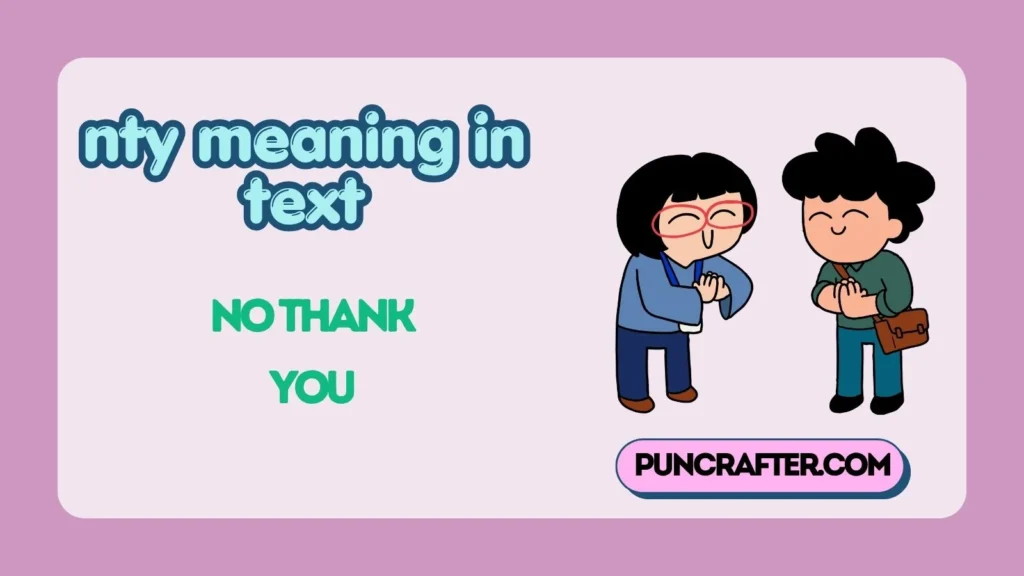
NTY = No Thank You
NTY is a shorthand abbreviation for “No Thank You.” People use it when they want to politely decline an offer, invitation, suggestion, request, or opportunity.
Unlike a blunt “No,” NTY sounds friendlier and more respectful.
Simple Definition
When someone sends “NTY,” they’re essentially saying:
- No, thank you.
- I appreciate the offer, but I’ll pass.
- Thanks, but I’m not interested.
- Politely declining.
Origin of NTY
NTY emerged from the broader culture of internet shorthand and SMS abbreviations.
During the early days of texting, character limits encouraged users to shorten common phrases. Expressions like:
- LOL (Laugh Out Loud)
- BRB (Be Right Back)
- TY (Thank You)
- NP (No Problem)
became widespread.
Eventually, users began combining “No” and “Thank You” into the compact abbreviation NTY.
The term gained popularity through:
- Text messaging
- Online gaming communities
- Discord servers
- Social media platforms
- Marketplace and trading groups
Pronunciation
Most people don’t say NTY aloud.
Instead, they simply read it as:
“No thank you.”
Occasionally, someone might spell out the letters individually:
“N-T-Y.”
How to Use “NTY” Correctly in Texts & Chat
The beauty of NTY is its simplicity.
It lets you reject something without sounding rude.
Casual Conversations
NTY works best in informal settings:
- Friends
- Family
- Gaming chats
- Group messages
- Social media DMs
Example:
Friend: Want pizza tonight?
You: NTY, I’m still full from lunch.
Social Media Usage
You’ll often see NTY on:
- Instagram DMs
- TikTok comments
- Snapchat chats
- Facebook Messenger
- X (Twitter) replies
Example:
“NTY, not my style 😂”
Gaming Communities
Gamers frequently use NTY when declining:
- Trades
- Team invites
- Guild requests
- Item exchanges
Example:
“NTY, looking for a better offer.”
When NOT to Use NTY
Avoid NTY in:
- Job applications
- Business emails
- Academic communication
- Formal customer support conversations
Instead write:
“No, thank you.”
or
“Thank you for the offer, but I must decline.”
Formatting Tips
You’ll commonly see:
- NTY
- nty
- Nty
All are generally accepted.
Popular emoji pairings include:
- NTY 😊
- NTY 👍
- NTY 🙏
- NTY 😂
These make the message feel even friendlier.
Real Conversation Examples Using “NTY”
Example 1: Between Friends
Alex: Want to come to the gym later?
Jordan: NTY, today is my lazy day.
Meaning: A friendly decline without hurting feelings.
Example 2: Dating Conversation
Chris: Want to grab coffee this weekend?
Taylor: NTY, but I appreciate the invite.
Meaning: Politely turning down an invitation.
Example 3: Family Group Chat
Mom: Anyone want leftovers?
Emma: NTY, I already ate.
Meaning: Respectful refusal.
Example 4: Workplace Chat
Coworker: Want me to take this task off your plate?
You: NTY, I can handle it.
Meaning: Declining assistance politely.
Example 5: Gaming Server
Player 1: Trade legendary sword?
Player 2: NTY, looking for rare armor.
Meaning: Declining an offer while keeping the conversation friendly.
Example 6: Online Marketplace
Buyer: Will you accept half the listed price?
Seller: NTY.
Meaning: Firm but polite rejection.
Common Mistakes & Misunderstandings
Even simple abbreviations can create confusion.
Mistake #1: Assuming NTY Is Rude
Some people see short responses as cold.
However, NTY is actually intended to be polite because it includes “thank you.”
Mistake #2: Confusing NTY With TY
TY means:
Thank You
NTY means:
No Thank You
Missing that first letter completely changes the meaning.
Mistake #3: Using NTY in Formal Situations
Many people mistakenly use texting abbreviations in professional communication.
While NTY is acceptable among friends, it may appear unprofessional in business settings.
Generational Differences
Older adults may not recognize NTY immediately.
Gen Z and younger Millennials generally understand it instantly.
This can sometimes create misunderstandings when different age groups communicate online.
Regional Differences
NTY is widely understood in:
- United States
- United Kingdom
- Canada
- Australia
However, people unfamiliar with English texting culture may need clarification.
If someone seems confused, simply explain:
“NTY means No Thank You.”
NTY Across Different Platforms & Demographics
Gen Z Usage
Gen Z frequently uses NTY because it:
- Saves time
- Feels casual
- Fits texting culture
- Sounds polite
You’ll often see it in:
- TikTok comments
- Snapchat messages
- Discord chats
Millennials
Millennials understand NTY but may alternate between:
- NTY
- No thanks
- Nah thanks
depending on context.
Older Generations
Many older users prefer writing the complete phrase:
“No thank you.”
This reduces ambiguity.
TikTok
On TikTok, NTY often appears in comments responding to:
- Product recommendations
- Viral challenges
- Opinions
- Trends
Example:
“NTY, I’m staying home 😂”
Instagram users commonly use NTY in DMs and comment sections when responding to invitations or suggestions.
Discord
Discord communities frequently use NTY during:
- Game trades
- Team requests
- Server interactions
Is NTY Safe for Work?
Generally yes.
However, because it’s informal slang, writing the full phrase remains safer in professional settings.
Related Slang Abbreviations & Alternatives
| Term | Meaning |
|---|---|
| TY | Thank You |
| NP | No Problem |
| IDC | I Don’t Care |
| IMO | In My Opinion |
| TBH | To Be Honest |
| BRB | Be Right Back |
| NVM | Never Mind |
| IDK | I Don’t Know |
| YW | You’re Welcome |
| OFC | Of Course |
Similar Alternatives to NTY
Instead of NTY, people may write:
- No thanks
- I’m good
- I’ll pass
- Maybe another time
- Not for me
- Appreciate it, but no thanks
Opposites of NTY
The opposite sentiment includes:
- Yes please
- Absolutely
- Sounds good
- Count me in
- Definitely
Why Do People Use NTY Instead of Writing “No Thank You”?
The biggest reason people use NTY is speed. Modern digital communication prioritizes quick responses, especially on mobile devices. Typing three letters is faster than writing the full phrase.
NTY also helps maintain a friendly tone while keeping messages short. Instead of appearing blunt with a simple “No,” the abbreviation includes an element of gratitude.
Other reasons people prefer NTY include:
- Faster texting
- Fits social media culture
- Saves screen space
- Common among younger users
- Easy to understand in most online communities
In fast-paced chats, NTY strikes a balance between efficiency and politeness.
The Psychology Behind NTY and Polite Rejection
People naturally want to avoid conflict and awkwardness. NTY works because it softens rejection.
When someone says “No Thank You,” they acknowledge the offer while declining it. This helps preserve relationships and reduces the chance of hurt feelings.
Communication experts often refer to this as a “soft negative response.” Instead of outright rejecting someone, the speaker combines refusal with appreciation.
For example:
- “No.” → Direct and potentially harsh
- “NTY.” → Friendly and respectful
This subtle difference explains why NTY remains popular in digital conversations.
NTY in Online Buying, Selling, and Trading Communities
NTY is extremely common in online marketplaces and trading groups.
Whether someone is selling collectibles, gaming items, clothing, or electronics, NTY offers a quick way to reject offers without creating unnecessary conflict.
Examples include:
Buyer: Will you take $20?
Seller: NTY.
Trader: Interested in swapping?
Collector: NTY, looking for something rarer.
In these situations, NTY keeps negotiations professional and courteous while clearly communicating disinterest.
NTY vs No Thanks: Is There a Difference?
Both expressions mean essentially the same thing, but they can feel slightly different depending on context.
| Expression | Tone | Typical Usage |
|---|---|---|
| NTY | Casual | Texts, gaming, social media |
| No Thanks | Casual to semi-formal | Everyday conversation |
| No Thank You | Polite and complete | Formal and informal settings |
NTY is generally reserved for digital communication, while “No Thank You” works almost everywhere.
Can NTY Sound Passive-Aggressive?
Like many text abbreviations, NTY can sometimes be interpreted differently depending on context.
For example:
Friend: You should definitely watch this show.
Reply: NTY.
Some people may view the response as playful, while others could perceive it as dismissive.
To avoid misunderstandings, users often add context:
- NTY 😊
- NTY lol
- NTY but thanks for suggesting it!
- NTY, maybe next time
Small additions can dramatically change the tone of a message.
How NTY Fits Into Modern Internet Culture
Internet communication has evolved toward brevity.
Many common expressions have been shortened:
- Thank You → TY
- You’re Welcome → YW
- No Problem → NP
- Be Right Back → BRB
- No Thank You → NTY
NTY reflects a broader trend where users prioritize efficiency without completely sacrificing politeness.
This balance is especially important on platforms where conversations move quickly and attention spans are short.
Situations Where NTY Is the Perfect Response
NTY is useful in many everyday scenarios.
Declining Invitations
When you don’t want to attend an event.
Rejecting Recommendations
When a suggested product, movie, or activity doesn’t interest you.
Turning Down Offers
When someone offers help, gifts, or services you don’t need.
Avoiding Arguments
NTY lets you disagree without escalating tension.
Ending Sales Pitches
Many users reply with NTY when approached by marketers or sellers online.
Its versatility makes it one of the most practical texting abbreviations available.
How Parents and Older Adults Can Understand NTY
Parents often encounter abbreviations in messages and social media posts that seem unfamiliar.
Fortunately, NTY is relatively easy to understand once decoded.
Unlike some internet slang that changes meaning based on context, NTY is straightforward and usually means exactly what it says: “No Thank You.”
Learning abbreviations like NTY can help parents:
- Better understand online communication
- Connect with younger family members
- Avoid unnecessary misunderstandings
- Stay informed about digital culture
Will NTY Remain Popular in the Future?
Internet slang changes rapidly, but NTY has several qualities that support its longevity.
It is:
- Easy to remember
- Simple to type
- Universally useful
- Polite across many situations
- Adaptable to different platforms
While new slang terms come and go, practical abbreviations that solve everyday communication needs often remain relevant for years.
NTY may not always be the trendiest expression online, but its usefulness makes it likely to stay part of digital communication for the foreseeable future.
Fun Facts About NTY You Probably Didn’t Know
- NTY is commonly used in gaming trade negotiations.
- The abbreviation became more widespread as mobile messaging increased.
- Many users understand NTY instantly even if they’ve never consciously learned it.
- It is considered one of the more polite internet abbreviations.
- NTY can help prevent conversations from sounding unnecessarily harsh.
- It appears frequently in online marketplaces and resale communities.
- Unlike some slang terms, NTY has remained remarkably consistent in meaning.
FAQs:
What does NTY mean in texting?
NTY stands for “No Thank You.” It is a polite abbreviation used to decline offers, invitations, suggestions, or requests during online conversations and text messaging.
Is NTY considered rude?
No. NTY is generally viewed as courteous because it combines a refusal with gratitude. Tone can vary depending on context, but the abbreviation itself is not rude.
What does NTY mean on Snapchat?
On Snapchat, NTY almost always means “No Thank You.” Users commonly send it when declining requests, invitations, or recommendations.
Can I use NTY in professional emails?
It’s not recommended. Professional communication usually benefits from writing the complete phrase “No, thank you” instead of using abbreviations.
Is NTY commonly used by Gen Z?
Yes. Gen Z frequently uses NTY across texting apps, social media platforms, gaming communities, and online chats because it’s quick, clear, and polite.
Does NTY have any other meanings?
In most online conversations, NTY means “No Thank You.” While rare alternative meanings may exist in specialized communities, this is by far the most common interpretation.
Conclusion:
The NTY meaning in text is simple: No Thank You. It’s a quick polite and widely understood way to decline an offer without sounding harsh.
Whether you’re texting friends chatting on Discord, scrolling through TikTok comments, or responding to a marketplace offer NTY helps keep conversations friendly while getting your point across.
As internet slang continues evolving understanding abbreviations like NTY makes digital communication easier and more natural.
The next time someone sends NTY you’ll know exactly what they mean and you might even start using it yourself.

Hi, I’m Lina Roys, the writer behind Puncrafter, where I shape simple words into clever lines that spark instant smiles.I write with heart and humor, crafting puns that feel light, warm, and impossible to scroll past.