Ever received a text that simply said oop and wondered what happened?
Maybe someone replied withoop 👀 after a surprising message. Perhaps you spotted it in TikTok comments Instagram caption or a group chat and felt completely lost.
You’re not alone.
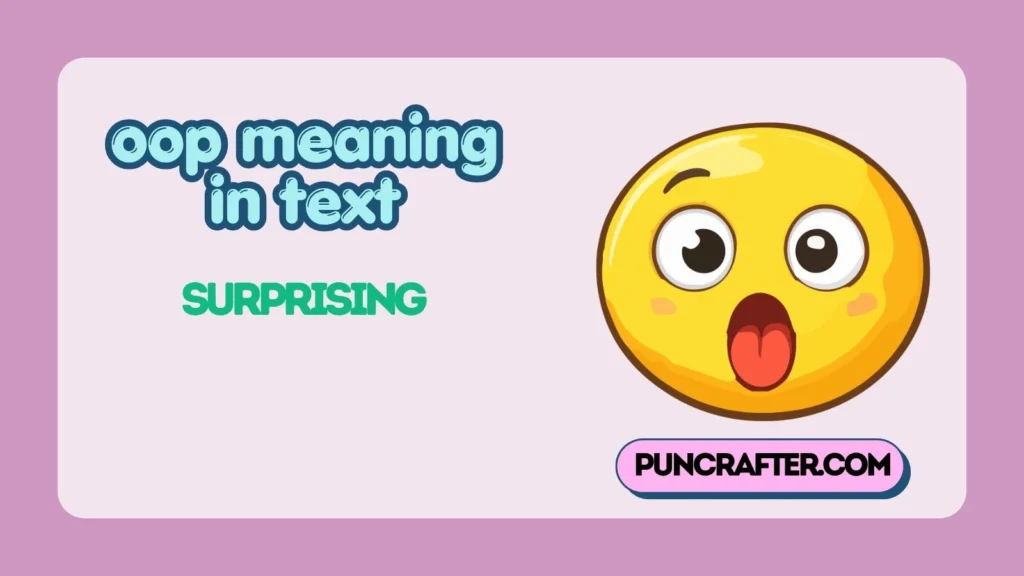
The oop meaning in text has become increasingly common across social media, messaging apps, and online conversations.
While it looks simple this tiny three letter expression can communicate surprise embarrassment realization amusement or even playful dramaall without typing a full sentence.
Understanding internet slang matters more than ever because online communication moves fast. New abbreviations appear daily, and staying updated helps you avoid confusion and connect more naturally with friends coworkers and online communities.
In this guide you’ll learn exactly what OOP means where it came from how to use it correctly common mistakes to avoid and plenty of real-world examples.
Updated for 2026.
What Does “OOP” Mean?
Definition
The most common OOP meaning in text is a quick expression of:
- Surprise
- Embarrassment
- Realization
- A minor mistake
- Being caught off guard
Think of it as a shorter version of “oops.”
Quick Answer
OOP means a brief reaction to something unexpected, awkward, surprising, or embarrassing. It is commonly used online as a casual substitute for “oops.”
Pronunciation
Most people pronounce it exactly as:
“oop” (rhymes with “loop”)
rather than spelling out the individual letters.
Origin of OOP
The slang version of OOP evolved from the word “oops,” which has been used for generations to acknowledge mistakes or accidents.
However, the modern internet version gained traction through:
- Twitter/X posts
- Meme culture
- Tumblr communities
- TikTok videos
- Viral reaction content
The phrase became especially popular when users started typing “oop” as a faster, funnier reaction than writing a full sentence.
How the Meaning Evolved
Originally:
Oops = I made a mistake.
Modern usage expanded to include:
- Shock
- Gossip reactions
- Funny observations
- Unexpected revelations
- Playful awkwardness
Today, “oop” often communicates an entire emotional reaction by itself.
How to Use “OOP” Correctly in Texts & Chat
The beauty of OOP is its flexibility.
Common Situations
Use OOP when:
- You accidentally reveal something
- Someone exposes surprising information
- You notice a mistake
- Something awkward happens
- A plot twist appears
Tone and Emotion
OOP can sound:
- Playful
- Lighthearted
- Surprised
- Slightly embarrassed
- Dramatic (in a joking way)
Platform-Specific Usage
SMS Text Messages
Used for accidental mistakes.
Example:
“Oop, wrong chat 😂”
Common in friend groups.
Example:
“Oop, didn’t mean to send that sticker.”
Instagram DMs
Often reacts to gossip or surprises.
Example:
“Oop 👀 tell me more.”
Twitter/X
Frequently used in reaction posts.
Example:
“Oop, they really said that publicly.”
Discord
Popular in gaming and community chats.
Example:
“Oop, I forgot to save.”
Usually appears in humorous responses.
Example:
“Oop, that’s awkward.”
When NOT to Use OOP
Avoid using OOP in:
- Job applications
- Business emails
- Academic papers
- Professional reports
- Formal customer communication
Instead use:
- Sorry
- My mistake
- I apologize
- Thank you for pointing that out
Formatting Tips
Common styles include:
- Oop
- oop
- OOP
- oop 👀
- oop lol
- oop 😅
- oop-
Lowercase “oop” is the most popular version.
Real Conversation Examples Using “OOP”
Example 1: Between Friends
Alex: I just texted my crush by accident.
Jamie: Oop 😭
Meaning: Jamie is reacting to an awkward situation with humor.
Example 2: In a Group Chat
Sarah: Wait… the teacher is in this group.
Everyone: OOP
Meaning: Sudden realization and mild panic.
Example 3: Dating Conversation
Taylor: I accidentally liked a photo from 2018.
Chris: Oop, that’s a classic mistake.
Meaning: Embarrassment mixed with amusement.
Example 4: Family Chat
Mom: Your dad forgot our anniversary.
Sibling: Oop 👀
Meaning: Surprise and curiosity about what happens next.
Example 5: Gaming Chat
Player 1: I sold my strongest weapon by mistake.
Player 2: OOP NOOO
Meaning: Shock and sympathy.
Common Mistakes & Misunderstandings
Even simple slang can confuse people.
1. Thinking OOP Means Object-Oriented Programming
In technology discussions, OOP often stands for:
Object-Oriented Programming
In casual texting, however, it almost always means a reaction similar to “oops.”
Context matters.
2. Assuming It Always Means a Mistake
While it can indicate a mistake, modern slang usage often signals:
- Surprise
- Drama
- Realization
- Humor
No actual mistake is required.
3. Overusing It
Dropping “oop” into every message can feel forced.
Use it naturally when a genuine reaction fits.
Generational Confusion
Older users may interpret OOP as:
- A technical term
- A typo
- An abbreviation they’ve never seen
Gen Z and younger Millennials usually understand it instantly.
How to Clarify
If someone asks:
“What does oop mean?”
A simple response works:
“It’s basically a shorter version of ‘oops’ or a reaction to something surprising.”
OOP Across Different Platforms & Demographics
Gen Z Usage
Gen Z frequently uses OOP to:
- React to drama
- Respond to tea or gossip
- Highlight awkward moments
- Add humor to conversations
For many younger users, a simple “oop 👀” says more than an entire paragraph.
Millennials
Millennials often use it similarly but may pair it with:
- LOL
- Haha
- Emojis
Example:
“Oop 😂”
Older Generations
Older internet users are less likely to use OOP regularly but are becoming more familiar with it through social media.
TikTok
On TikTok, OOP appears in:
- Comment sections
- Reaction videos
- Viral drama discussions
- Funny storytelling posts
Popular in:
- Story replies
- Meme pages
- Celebrity gossip posts
Discord
Common among:
- Gamers
- Stream viewers
- Community groups
Is OOP Safe for Work?
Generally yes.
OOP is:
✅ Non-offensive
✅ Family-friendly
✅ Workplace-safe in casual chats
However, it’s still informal and not appropriate for professional documents.
Viral Popularity
Internet personalities, meme creators, and viral social media moments helped transform OOP from a simple typo-like expression into a recognized online reaction.
Related Slang Abbreviations & Alternatives
| Term | Meaning |
|---|---|
| Oops | Traditional version of OOP |
| LOL | Laughing Out Loud |
| OMG | Oh My God |
| SMH | Shaking My Head |
| IYKYK | If You Know You Know |
| FR | For Real |
| TBH | To Be Honest |
| ICYMI | In Case You Missed It |
| BRB | Be Right Back |
| YIKES | Expression of discomfort or shock |
Similar Expressions
- Oops
- Yikes
- Uh-oh
- Oh no
- Well then
- Wow
Opposite Expressions
While OOP signals surprise, opposite reactions might include:
- Expected
- Obviously
- Of course
- As planned
Learn more about: LOL meaning, TBH meaning, SMH meaning, FR meaning, and IYKYK meaning.
Why Do People Use “OOP” Instead of “Oops”?
The internet rewards speed. Typing “oop” is faster than writing “oops,” and it feels more natural in casual online conversations. Many users also prefer it because it sounds playful and less serious.
It Feels More Conversational
Unlike “oops,” which can sound like an admission of fault, “oop” often feels like a quick reaction. People use it to acknowledge awkward moments without making a big deal out of them.
It Matches Internet Humor
Modern online humor often relies on short, expressive reactions. Terms like “oop,” “yikes,” and “bruh” fit perfectly into meme culture because they instantly convey emotion.
Emotional Meanings Behind “OOP”
One interesting thing about OOP is that its meaning changes based on context.
Surprise
“Oop, I didn’t see that coming.”
The speaker is reacting to unexpected news.
Embarrassment
“Oop, I accidentally sent that.”
The speaker recognizes a mistake.
Realization
“Oop, now I understand.”
The speaker has suddenly figured something out.
Playful Drama
“Oop 👀 somebody’s in trouble.”
The speaker is reacting to gossip or conflict in a lighthearted way.
OOP in Social Media Culture
Social media platforms helped transform OOP into a widely recognized internet expression.
TikTok Reactions
Users frequently comment “oop” when a creator reveals surprising information or responds to criticism.
Meme Pages
Meme accounts often use OOP as a caption when highlighting awkward or ironic situations.
Celebrity Gossip Discussions
Fans commonly reply with “oop 👀” when unexpected celebrity news breaks online.
Popular Emoji Combinations With OOP
Many users combine OOP with emojis to add extra meaning.
| Expression | Meaning |
|---|---|
| Oop 👀 | Curious or interested |
| Oop 😂 | Finds something funny |
| Oop 😅 | Slight embarrassment |
| Oop 😭 | Extreme amusement or shock |
| Oop 🤭 | Trying not to laugh |
| Oop 🙈 | Awkward situation |
| Oop 🤣 | Something hilariously unexpected |
Why Emojis Matter
The emoji often determines whether the message sounds funny, embarrassed, sarcastic, or dramatic.
Is OOP Still Popular in 2026?
Internet slang changes quickly, but OOP remains surprisingly resilient.
Continued Usage Among Gen Z
Many younger users still use OOP in:
- Group chats
- TikTok comments
- Instagram stories
- Discord servers
Less Common in Professional Spaces
While widely understood online, OOP remains mostly limited to informal communication.
Why It Has Lasted
Its simplicity, flexibility, and emotional range help keep it relevant even as new slang terms emerge.
How Parents and Teachers Can Understand OOP
Many adults encounter OOP without knowing its meaning.
What It Usually Means
In most cases, it’s simply a harmless reaction expressing surprise or awkwardness.
Should Parents Be Concerned?
No. OOP is generally considered family-friendly slang and does not carry inappropriate meanings.
Understanding Modern Digital Language
Learning terms like OOP helps parents better understand how younger generations communicate online.
OOP vs Similar Internet Expressions
OOP vs Oops
“Oops” is more traditional and complete, while “oop” feels modern and casual.
OOP vs Yikes
is usually playful, while “yikes” often signals discomfort or secondhand embarrassment.
OOP vs OMG
“OMG” expresses stronger shock, whereas “oop” typically reflects a lighter reaction.
OOP vs Bruh
“Bruh” often conveys disbelief or frustration. OOP is usually softer and more humorous.
The Psychology of Quick Reaction Slang
Why do tiny expressions like OOP become so popular?
Faster Communication
People naturally look for shortcuts when communicating online.
Emotional Efficiency
A single word can communicate an entire reaction without requiring a lengthy explanation.
Community Identity
Using shared slang helps users feel connected to online communities and social groups.
Examples of OOP in Viral Internet Situations
Unexpected Plot Twists
“Oop, that ending changed everything.”
Accidental Reveals
“Oop, they weren’t supposed to post that.”
Awkward Screenshots
“Oop 😭 this conversation should’ve stayed private.”
Celebrity Moments
“Oop 👀 the comments section is getting messy.”
These examples show how OOP functions as a universal internet reaction to surprising developments.
Will OOP Become Outdated?
Like all slang, OOP may eventually decline in popularity.
Slang Evolves Constantly
Every generation creates new words and abbreviations.
Some Terms Stay Longer
Expressions that are simple and adaptable tend to survive longer than highly niche slang.
OOP’s Future
Because it works in many situations and requires little explanation, OOP has a good chance of remaining recognizable for years to come.
FAQs:
What does OOP mean in texting?
OOP usually means a reaction to surprise, embarrassment, realization, or a small mistake. It’s commonly used instead of typing “oops” and is especially popular among younger internet users.
Is OOP rude?
No. OOP is generally harmless and playful. The tone depends on context, but it is rarely considered offensive or disrespectful.
What does “oop 👀” mean?
Adding the eyes emoji usually signals curiosity, surprise, or interest in unfolding drama. It often means, “That got interesting.”
Can I use OOP at work?
Only in informal workplace chats where casual language is accepted. Avoid using it in professional emails, reports, or client communications.
Is OOP a Gen Z slang term?
While people of all ages may use it, OOP is strongly associated with Gen Z internet culture, social media trends, and modern texting habits.
Does OOP always mean “oops”?
Not necessarily. It can mean “oops,” but it can also express surprise, shock, realization, or playful commentary on an unexpected situation.
Why is OOP so popular online?
It’s short, expressive, and instantly communicates emotion. In fast-moving online conversations, a simple “oop” can replace an entire reaction sentence.
Conclusion:
The OOP meaning in text is surprisingly simple: it’s a casual internet expression used to show surprise realization embarrassment or a small mistake.
What started as a shortened version of oops has evolved into one of social media’s favorite reaction words. Whether you’re texting friends scrolling TikTok chatting on Discord or replying to memes you’ll likely see it everywhere.
Now that you know exactly how OOP works you’ll never be confused when someone drops an oop 👀 into a conversation.

Hi, I’m Lina Roys, the writer behind Puncrafter, where I shape simple words into clever lines that spark instant smiles.I write with heart and humor, crafting puns that feel light, warm, and impossible to scroll past.