Have you ever opened a text message scrolled through social media or joined an online discussion and seen someone write TW before a post? If so, you’re not alone. The abbreviation TW meaning in text has become increasingly common across social platforms, messaging apps online communities and even workplace conversations.
Internet language evolves fast. One day everyone is saying LOL, and the next day a new abbreviation takes over your feed. Understanding these terms helps you communicate clearly avoid misunderstandings and navigate online spaces more confidently.
In this guide, you’ll learn exactly what TW meaning in text is, where it came from, how people use it today, common mistakes to avoid real world examples and related internet slang worth knowing.
Updated for 2026 and designed for beginners parents students and anyone trying to decode modern digital communication.
What Does “TW” Mean?
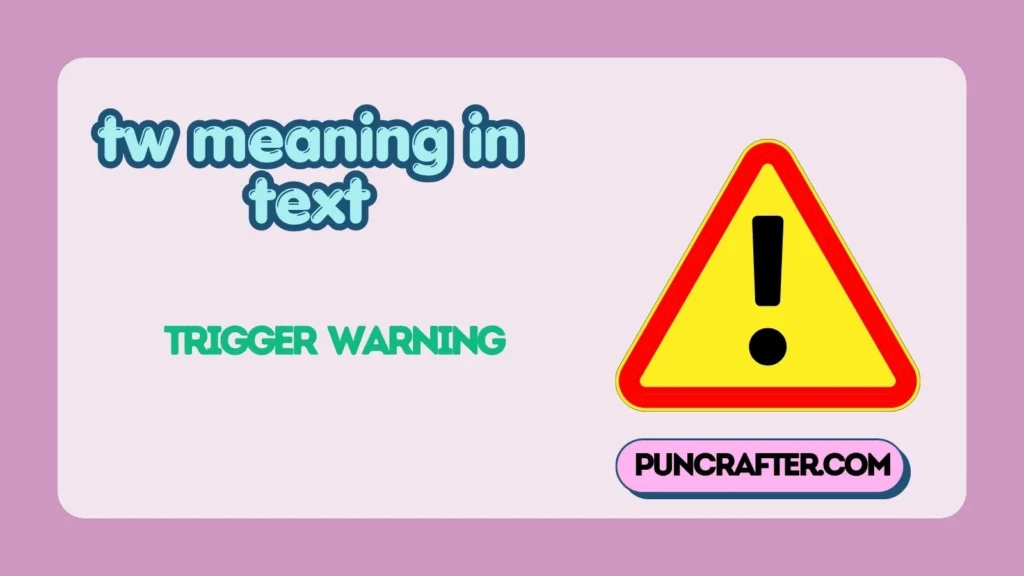
The most common TW meaning in text is:
Quick Answer: TW stands for Trigger Warning, a notice placed before content that may be emotionally distressing or upsetting to some readers.
People use TW to give others a heads-up before discussing sensitive topics such as:
- Violence
- Abuse
- Trauma
- Mental health struggles
- Eating disorders
- Self-harm discussions
- Loss and grief
- Graphic events
Origin of TW
The term “Trigger Warning” originated in online support communities during the late 1990s and early 2000s. It became especially popular on forums where people discussed trauma recovery and mental health experiences.
As social media platforms expanded, the abbreviation “TW” spread to:
- Tumblr
- Twitter/X
- TikTok
- Discord
- Online gaming communities
Over time, the abbreviation moved beyond support groups and became part of mainstream internet culture.
How the Meaning Has Evolved
Originally, TW was mainly used to protect trauma survivors from unexpected exposure to distressing content.
Today, people often use TW more broadly to flag:
- Sensitive discussions
- Graphic news
- Emotional stories
- Potentially disturbing images
- Heavy personal experiences
Pronunciation Guide
Most users simply say:
“Tee-Double-U”
Others may read it as:
“Trigger Warning”
Both are correct.
How to Use “TW” Correctly in Texts & Chat
Understanding context is important when using TW.
Appropriate Situations
Use TW before sharing:
- Graphic news stories
- Personal trauma experiences
- Disturbing images
- Sensitive discussions
- Serious mental health topics
Example:
TW: Discussion of grief and loss
This prepares readers for what’s coming next.
Platform-Specific Usage
SMS & Text Messages
Used before discussing sensitive topics with friends or family.
Example:
“TW: Mental health discussion. I wanted to talk about something difficult.”
Common in group chats where participants may have different comfort levels.
Often appears in captions, stories, or carousel posts.
Example:
“TW: Eating disorder recovery discussion.”
Twitter/X
Frequently placed at the beginning of tweets.
Discord
Very common in community servers and support groups.
Widely used in discussion threads covering sensitive experiences.
When NOT to Use TW
Avoid using TW for:
- Everyday conversations
- Routine announcements
- Non-sensitive content
- Professional emails unless discussing serious topics
Example of unnecessary use:
“TW: I failed my math quiz.”
Most readers would consider this excessive.
Formatting Tips
Common formats include:
- TW:
- TW //
- TW for violence
- Trigger Warning:
- TW: Mental health
Many users pair TW with emojis such as:
⚠️ Warning
💔 Emotional topics
🛑 Sensitive content
Real Conversation Examples Using “TW”
Example 1: Between Friends
Sarah: TW: Discussion about anxiety. Can I vent for a minute?
Emma: Of course. What’s going on?
Meaning: Sarah is politely preparing her friend for a potentially sensitive conversation.
Example 2: In a Group Chat
Alex: TW: Graphic accident description.
Jordan: Thanks for the warning. I’ll skip that part.
Meaning: The warning allows readers to decide whether they want to continue.
Example 3: Dating Conversation
Chris: TW: Family trauma discussion.
Taylor: Thanks for letting me know beforehand.
Meaning: Shows consideration and emotional awareness.
Example 4: Gaming Community
Moderator: TW: Discussion of harassment reports.
Members: Understood.
Meaning: Creates a respectful community environment.
Example 5: Work Chat
Manager: TW: Discussion regarding workplace violence case study.
Team: Thanks for the notice.
Meaning: Used in educational or training contexts involving sensitive topics.
Common Mistakes & Misunderstandings
Even though TW is popular, people often misuse it.
Mistake #1: Thinking TW Has One Universal Meaning
Although Trigger Warning is the most common definition, abbreviations can have different meanings in specialized communities.
Always check the context.
Mistake #2: Using TW for Minor Inconveniences
Some users jokingly write:
“TW: Monday morning.”
While humorous, excessive use can reduce the seriousness of genuine trigger warnings.
Mistake #3: Forgetting to Explain the Topic
Simply writing “TW” isn’t always enough.
Better:
TW: Violence
Instead of:
TW
Readers benefit from knowing what type of content follows.
Generational Differences
Gen Z tends to recognize TW instantly.
Many Millennials understand it as well.
Older internet users may ask:
“What does TW mean?”
This is completely normal because internet language changes rapidly.
Cultural Differences
Usage is most common in:
- United States
- United Kingdom
- Canada
- Australia
In some regions, the abbreviation may be less familiar, making a brief explanation helpful.
“TW” Across Different Platforms & Demographics
Gen Z Usage
Gen Z frequently uses TW on:
- TikTok
- Discord
- X (Twitter)
They often include it before videos, stories, and personal experiences.
Millennial Usage
Millennials commonly encounter TW in:
- Online communities
- Blogs
- Reddit discussions
- Mental health conversations
Older Generations
Older users may understand the full phrase “Trigger Warning” but not recognize the abbreviation immediately.
TikTok
TW appears in:
- Video captions
- On-screen text
- Storytime content
Common in:
- Carousel posts
- Reels
- Educational content
Discord
Extremely common due to community moderation practices.
Is TW Formal or Informal?
TW is generally:
✅ Informal
✅ Social-media friendly
✅ Appropriate in community discussions
Less common in:
❌ Formal business communication
❌ Corporate emails
❌ Legal documents
Is It Safe for Work?
Usually yes.
The abbreviation itself is professional and respectful.
The content following it may determine workplace appropriateness.
Related Slang Abbreviations & Alternatives
| Term | Meaning |
|---|---|
| CW | Content Warning |
| FYI | For Your Information |
| IMO | In My Opinion |
| TMI | Too Much Information |
| NSFW | Not Safe For Work |
| PSA | Public Service Announcement |
| ICYMI | In Case You Missed It |
| TLDR | Too Long; Didn’t Read |
| BRB | Be Right Back |
| SMH | Shaking My Head |
Similar Terms
- CW (Content Warning)
- Advisory Notice
- Viewer Discretion
- Sensitive Content Warning
Casual Synonyms
People may also write:
- Heads up
- Fair warning
- Just so you know
- Sensitive topic ahead
Opposite Concept
The opposite of a trigger warning would simply be posting content without any advance notice.
Why Has TW Become So Popular Online?
The rise of TW reflects a broader shift toward digital empathy and community awareness. As social media became a place for people to share personal experiences, users began looking for ways to discuss difficult topics without unexpectedly exposing others to distressing content.
Platforms like Tumblr, Reddit, and Twitter/X helped popularize the abbreviation because posts could spread rapidly to large audiences. A simple “TW” gave readers the opportunity to decide whether they wanted to continue reading.
Today, TW is recognized by millions of internet users and has become part of everyday online communication.
Key Reasons for Its Popularity
- Increased mental health awareness
- Growth of online support communities
- Faster social media sharing
- Greater emphasis on respectful communication
- Easier content moderation
Different Types of Trigger Warnings People Use
Not all trigger warnings are the same. Users often specify the topic so readers know exactly what content follows.
Common Examples
1:TW: Violence
Used before discussing physical harm, assaults, or violent incidents.
2:TW: Abuse
Appears before conversations about emotional, physical, or psychological abuse.
3:TW: Eating Disorders
Common in recovery communities and wellness discussions.
4:TW: Grief and Loss
Used when discussing death, bereavement, or mourning.
5:TW: Mental Health
May precede discussions about anxiety, depression, trauma, or related experiences.
Providing a specific warning helps readers make informed choices.
TW vs Other Common Internet Warnings
Many people confuse TW with similar internet abbreviations.
| Abbreviation | Meaning | Purpose |
|---|---|---|
| TW | Trigger Warning | Alerts readers to potentially triggering topics |
| CW | Content Warning | Warns about potentially sensitive content |
| NSFW | Not Safe For Work | Indicates inappropriate workplace content |
| Spoiler | Story Reveal Warning | Prevents ruining movies, shows, or games |
| PSA | Public Service Announcement | Shares important information |
Understanding these differences can help you communicate more accurately online.
Examples of TW in Social Media Posts
Social media platforms have unique ways of using trigger warnings.
Instagram Example
TW: Discussion of grief.
“Losing a loved one changed my perspective on life…”
TikTok Example
TW: Mental health discussion.
Creators often place the warning both in the caption and within the first few seconds of a video.
X (Twitter) Example
TW: Violence
Users place the warning at the start of a tweet before sharing details.
Reddit Example
TW: Abuse
Many subreddit communities require warnings before discussing sensitive experiences.
How Schools, Universities, and Educators Use TW
Educational environments sometimes use trigger warnings before introducing difficult subjects.
Examples include:
- Historical conflicts
- Violence in literature
- Psychological case studies
- Sensitive documentaries
- Discussions of discrimination
The goal is not to prevent learning but to help students prepare for emotionally challenging material.
Many universities provide guidance on when and how trigger warnings should be used responsibly.
TW in Mental Health Communities
Mental health communities were among the earliest adopters of trigger warnings.
Support groups often discuss deeply personal experiences involving trauma, recovery, and emotional challenges.
Using TW helps create safer spaces where participants can choose when they are emotionally prepared to engage with certain topics.
Many online forums encourage members to include trigger warnings as a sign of respect for others’ experiences.
Can TW Have Other Meanings Besides Trigger Warning?
Yes, although Trigger Warning is the most common meaning in texting and social media.
Depending on the industry or context, TW may also stand for:
- Twin
- Teamwork
- Technical Writer
- Time Window
- Territory War (gaming)
- Trade War
How to Identify the Correct Meaning
Look at:
- The conversation topic
- The platform being used
- The people involved
- Nearby words and phrases
Context almost always reveals the intended meaning.
Is TW Used Differently Around the World?
Internet slang often varies by region.
In English-speaking countries such as the United States, United Kingdom, Canada, and Australia, TW is widely understood as Trigger Warning.
In countries where English is not the primary language, users may recognize the abbreviation through social media exposure but use it less frequently in everyday conversations.
Global platforms like TikTok and Instagram have helped standardize its meaning internationally.
Should Parents Know What TW Means?
Absolutely.
Parents who understand modern internet language can better communicate with their children and understand online conversations.
Knowing what TW means can help parents:
- Understand social media posts
- Recognize discussions of sensitive topics
- Support healthy digital communication
- Discuss online safety more effectively
Awareness doesn’t require monitoring every message—it simply helps bridge the generational gap.
The Future of TW and Digital Communication
Internet language never stands still.
As online communities evolve, TW may continue to expand beyond its original role in trauma-related discussions.
Future trends may include:
- More detailed content labels
- AI-generated content warnings
- Platform-specific warning systems
- Enhanced accessibility features
Despite these changes, the core purpose of TW will likely remain the same: helping people navigate sensitive content more thoughtfully.
Fun Facts About TW You Probably Didn’t Know
It Became Mainstream Through Tumblr
Many internet users first encountered TW during Tumblr’s peak popularity.
It’s Used by Millions Daily
From Reddit threads to TikTok captions, TW appears across countless posts every day.
Some Communities Require It
Certain forums and support groups make trigger warnings mandatory for specific topics.
It Influenced Platform Features
Modern content warning tools on several social platforms were inspired by community-created practices like TW.
It’s More Than Slang
Unlike many abbreviations, TW serves a practical communication purpose rather than simply saving typing time.
FAQs
What does TW mean in texting?
TW usually means Trigger Warning. It alerts readers that sensitive or potentially upsetting content follows. The goal is to give people a choice about whether they want to continue reading.
Does TW always mean Trigger Warning?
Most of the time, yes. In internet culture and social media, Trigger Warning is by far the most widely recognized meaning. Context may occasionally create alternative meanings, but they’re much less common.
What is the difference between TW and CW?
TW stands for Trigger Warning and focuses on potentially triggering material. CW means Content Warning and is broader, covering anything readers may want advance notice about.
Why do people use TW online?
People use TW to show consideration for others. It helps readers prepare emotionally and decide whether they’re comfortable engaging with a topic before reading further.
Should I use TW on social media?
If you’re sharing content involving trauma, violence, abuse, grief, or other sensitive subjects, using TW can be a thoughtful and respectful choice.
Is TW a Gen Z term?
Gen Z uses TW frequently, but the abbreviation predates Gen Z. It originated in earlier online communities and became mainstream through social media platforms over time.
Conclusion
The TW meaning in text is simple but important. In most online conversations TW stands for Trigger Warning, a brief notice that alerts readers to potentially sensitive or distressing content.
Whether you’re texting friends, posting on Instagram chatting on Discord, or participating in online communities, understanding TW helps you communicate more thoughtfully and avoid confusion.
Internet slang changes constantly but TW remains one of the most widely recognized abbreviations across modern digital culture. The next time you see it, you’ll know exactly what it means and when to use it yourself.

Hi, I’m Lina Roys, the writer behind Puncrafter, where I shape simple words into clever lines that spark instant smiles.I write with heart and humor, crafting puns that feel light, warm, and impossible to scroll past.