Ever received a message that simply said STTM and immediately wondered whether the sender was joking annoyed or genuinely upset?
You’re not alone.
The STTM meaning in text isn’t obvious to everyone especially because internet slang evolves at lightning speed. One day everyone’s saying LOL, and the next you’re trying to decode abbreviations that seem to appear out of nowhere.
Updated for 2026 this guide breaks down exactly what STTM means how people use it across different platforms when it’s harmless teasing and when it’s a sign someone really needs space.
By the end you’ll know how to interpret STTM correctly avoid awkward misunderstandings and confidently navigate modern digital conversations.
What Does “STTM” Mean?
The most common meaning of STTM is:
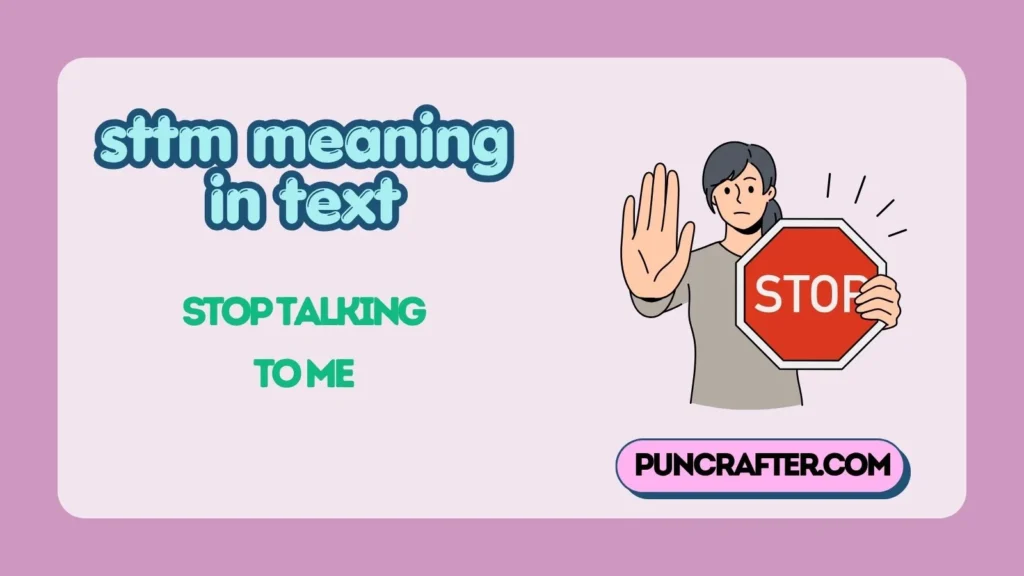
Quick Answer: STTM stands for “Stop Talking To Me.”
It’s typically used in informal conversations to express irritation, playful annoyance, embarrassment, or a desire to end a discussion.
Definition
STTM is a texting abbreviation that tells someone to stop messaging or stop bringing up a particular topic.
Depending on context, it can mean:
- “I’m annoyed right now.”
- “You’re embarrassing me.”
- “Please stop.”
- “Haha, seriously, stop talking to me.”
Origin of STTM
Unlike older abbreviations such as LOL or BRB, STTM emerged organically through texting culture and social media conversations.
It became more noticeable through:
- Group chats
- Snapchat conversations
- Discord servers
- Instagram DMs
- Gaming communities
Rather than originating from one specific platform, STTM spread through peer-to-peer communication.
How Its Meaning Has Evolved
Originally, STTM often reflected genuine frustration.
Today, many younger users employ it humorously:
Friend: “Remember when you tripped in front of your crush?”
You: “STTM 😭”
The phrase now frequently signals playful embarrassment rather than anger.
Pronunciation Guide
Most people spell it out:
S-T-T-M
Instead of saying the full phrase aloud.
How to Use “STTM” Correctly in Texts & Chat
Using STTM effectively depends entirely on tone.
Casual and Playful Usage
STTM often appears between close friends.
Examples include:
- Friendly teasing
- Inside jokes
- Embarrassing memories
- Exaggerated reactions
Serious Usage
Sometimes STTM genuinely means:
- “I need space.”
- “I’m upset.”
- “Please stop contacting me.”
When paired with short replies and negative language, take it seriously.
Platform-Specific Usage
SMS Text Messages
Often interpreted more seriously due to the lack of visual cues.
Usually softened with emojis.
Examples:
- STTM 😂
- STTM 😭
Instagram DMs
Frequently used as dramatic humor.
Twitter/X
Appears in reactions and quote posts.
Discord
Common among gaming communities as banter.
Less common but occasionally used in comment threads.
When NOT to Use STTM
Avoid using STTM in:
- Professional emails
- Workplace chats
- Academic communication
- Customer service interactions
It may appear rude or immature.
Formatting Tips
People commonly write:
- STTM
- sttm
- STTM 😭
- STTM lol
- STTM pls
Capitalization doesn’t change the meaning.
Real Conversation Examples Using “STTM”
Between Friends
Emma: Remember when you called your teacher “Mom”?
Sophie: STTM 😭
What it conveys: Playful embarrassment.
In a Group Chat
Alex: We’re posting your karaoke video.
Jordan: STTM. All of you.
What it conveys: Mock outrage.
Dating Scenario
Taylor: I told my sister you like them.
Chris: STTM 😭😭
What it conveys: Nervous teasing.
Family Chat
Sibling: Mom found your hidden snacks.
You: STTM immediately.
What it conveys: Exaggerated frustration.
Gaming Context
Teammate: Nice job missing every shot.
Player: STTM 😂
What it conveys: Self-deprecating humor.
Common Mistakes & Misunderstandings
1. Assuming It’s Always Rude
Many readers interpret STTM literally.
However, among friends, it’s often affectionate teasing.
Context matters.
2. Ignoring Emojis
Compare these:
- STTM.
- STTM 😂
- STTM 😭
The emotional meaning shifts dramatically.
Emojis soften the phrase.
3. Generational Confusion
Older users may think STTM signals serious conflict.
Gen Z often uses it theatrically.
A parent seeing “STTM” in a teenager’s group chat might assume an argument occurred when everyone was actually joking.
Cultural Differences
Internet slang varies worldwide.
English-speaking online communities generally recognize STTM similarly, but non-native speakers may interpret it literally.
How to Clarify
If unsure, simply ask:
“Did you mean that seriously or were you joking?”
Clear communication prevents misunderstandings.
STTM Across Different Platforms & Demographics
Gen Z Usage
Gen Z tends to use STTM:
- Ironically
- Dramatically
- Alongside emojis
- In meme culture
It often means:
“I can’t believe you just said that.”
Rather than actual hostility.
Millennials
Millennials generally understand the abbreviation but may use it less frequently.
When they do, it’s often genuine annoyance or sarcastic humor.
Older Generations
Older adults may:
- Misinterpret the tone
- View it as disrespectful
- Prefer complete sentences
TikTok
TikTok comments occasionally use STTM as exaggerated reactions.
Example:
“That plot twist? STTM 😭”
Popular in:
- Story replies
- DM conversations
- Friend banter
Discord
Gaming communities embrace abbreviations for speed and humor.
STTM fits naturally into fast-paced chats.
Is STTM Safe for Work?
No.
STTM is considered informal slang.
Use professional alternatives instead:
- “Let’s continue this later.”
- “I need some time to focus.”
- “Can we revisit this tomorrow?”
Related Slang Abbreviations & Alternatives
| Term | Meaning |
|---|---|
| LOL | Laugh Out Loud |
| LMAO | Laughing My Ass Off |
| BRB | Be Right Back |
| IDC | I Don’t Care |
| IMO | In My Opinion |
| TBH | To Be Honest |
| SMH | Shaking My Head |
| IDK | I Don’t Know |
| IJBOL | I Just Burst Out Laughing |
| GTG | Got To Go |
Synonyms for STTM
- Stop.
- Please quit.
- Leave me alone.
- You’re embarrassing me.
- Enough already.
Casual Opposites
- Keep talking.
- Tell me more.
- Continue.
- Go on.
Why Do People Use STTM Instead of Writing the Full Phrase?
Typing habits have changed dramatically over the years. Abbreviations like STTM save time and add personality to conversations. In fast-moving chats, people often prefer short expressions that instantly communicate emotion. Using STTM can make a reaction feel more dramatic, humorous, or relatable than simply typing “stop talking to me.”
For younger users especially, shorthand expressions are part of digital identity. They signal familiarity with internet culture and help conversations feel more casual and authentic.
The Emotional Meaning Behind STTM
Although STTM literally means “Stop Talking To Me,” the emotional intent varies widely.
It can communicate:
- Playful annoyance
- Secondhand embarrassment
- Mild frustration
- Sarcastic disbelief
- A genuine desire for distance
The surrounding conversation usually reveals whether the sender is joking or serious. Understanding emotional context is often more important than knowing the literal definition.
Signs That STTM Is Being Used as a Joke
Many people worry they’ve upset someone after receiving STTM. However, certain clues suggest it’s meant humorously.
Common indicators include:
- Laughing emojis (😂, 😭)
- Multiple exclamation marks
- Ongoing friendly conversation
- Inside jokes
- Exaggerated wording
For example:
“You still have that embarrassing school photo? STTM 😭”
The sender is likely laughing rather than ending the friendship.
When You Should Take STTM Seriously
There are situations where STTM shouldn’t be dismissed as internet humor.
Warning signs include:
- The person has been upset previously.
- Replies suddenly become short.
- There are no emojis or playful cues.
- The conversation involves conflict.
- The person stops responding afterward.
In these cases, respecting boundaries and giving the person space is the best approach.
How Parents Can Understand STTM in Teen Conversations
Parents often encounter unfamiliar abbreviations while monitoring digital communication. Seeing STTM can be alarming at first glance.
In most cases, teens use it dramatically among friends without serious intent. However, parents should consider the overall context before reacting.
Questions to ask include:
- Is the tone playful?
- Are both people continuing the conversation?
- Has there been an ongoing disagreement?
Looking at the bigger picture helps avoid unnecessary concern.
How Non-Native English Speakers Can Interpret STTM
For English learners, internet slang can be confusing because abbreviations rarely follow textbook rules.
The phrase “Stop Talking To Me” may sound extremely harsh when translated directly. In practice, STTM often functions as a lighthearted reaction among friends.
Understanding cultural context helps non-native speakers avoid misreading tone in online conversations.
STTM in Memes and Internet Humor
Internet users frequently exaggerate emotions for comedic effect.
STTM fits perfectly into meme culture because it captures over-the-top reactions to situations that are only mildly embarrassing.
Examples include:
- “My friend showed my childhood haircut to everyone. STTM.”
- “I waved back at someone who wasn’t waving at me. STTM.”
This dramatic style of humor contributes to the abbreviation’s popularity.
How STTM Compares to Similar Expressions
Several internet phrases communicate emotions similar to STTM, but they aren’t identical.
STTM vs IDC
asks someone to stop engaging, while IDC means “I don’t care.”
STTM vs GTG
GTG simply means “Got To Go” and is neutral rather than emotional.
STTM vs Leave Me Alone
“Leave me alone” sounds more direct and serious than the often-playful STTM.
Understanding these distinctions improves communication accuracy.
Can STTM Damage Relationships?
Used jokingly, STTM rarely causes problems.
Problems arise when:
- The relationship lacks trust.
- Humor is misunderstood.
- One person takes the phrase literally.
- Emotional boundaries aren’t respected.
If confusion occurs, a quick clarification such as “I was kidding!” can prevent hurt feelings.
The Future of Texting Slang Like STTM
Digital language never stays still.
Some abbreviations disappear within months, while others become part of everyday communication. STTM’s adaptability—working as both humor and emotional expression may help it remain relevant.
As new platforms emerge, slang will continue evolving, reflecting how people connect, joke, and express themselves online.
Quick Cheat Sheet: STTM at a Glance
| Category | Explanation |
|---|---|
| Full Form | Stop Talking To Me |
| Tone | Playful, sarcastic, or serious |
| Formality | Informal |
| Used By | Mostly teens and young adults |
| Common Platforms | Snapchat, Instagram, Discord, WhatsApp |
| Safe for Work | No |
| Emoji Pairings | 😭 😂 🙄 |
| Spoken Out Loud | Usually “S-T-T-M” |
Expert Tips for Responding to STTM
If someone sends you STTM, consider these responses:
- If they’re joking: “Never. I’m just getting started 😂”
- If you’re unsure: “Haha, are you serious or kidding?”
- If they’re upset: “Okay, I’ll give you some space.”
FAQs:
Is STTM always negative?
No. It often expresses playful embarrassment rather than genuine anger.
What does STTM mean on Snapchat?
On Snapchat, STTM usually means “Stop Talking To Me.” Friends often use it jokingly with emojis.
Can STTM end friendships?
Not necessarily. Context matters. If used seriously during conflict, it could indicate someone needs space.
Is STTM popular with Gen Z?
Yes. Gen Z users frequently employ it in humorous or exaggerated situations.
Should I use STTM at work?
No. Workplace communication should remain professional and clear.
Conclusion:
The STTM meaning in text is simple on the surface: Stop Talking To Me.
But like most internet slang the real meaning depends on who says it how they say it and where the conversation happens.
Among close friends STTM often signals laughter embarrassment and playful drama. In serious contexts it can communicate frustration or a genuine request for space.
Understanding these nuances helps you decode digital conversations more accurately and avoid unnecessary misunderstandings.
Got a favorite text abbreviation you use all the time? Drop it in the comments below and keep exploring the ever changing world of internet slang.

Hi, I’m Lina Roys, the writer behind Puncrafter, where I shape simple words into clever lines that spark instant smiles.I write with heart and humor, crafting puns that feel light, warm, and impossible to scroll past.